Choose by the hole first, not the motor wattage alone.
The right magnetic drill must cover your maximum hole diameter and cutting depth, provide enough torque at the required speed, maintain reliable magnetic adhesion on the workpiece, and accept the correct annular cutter or drill attachment.
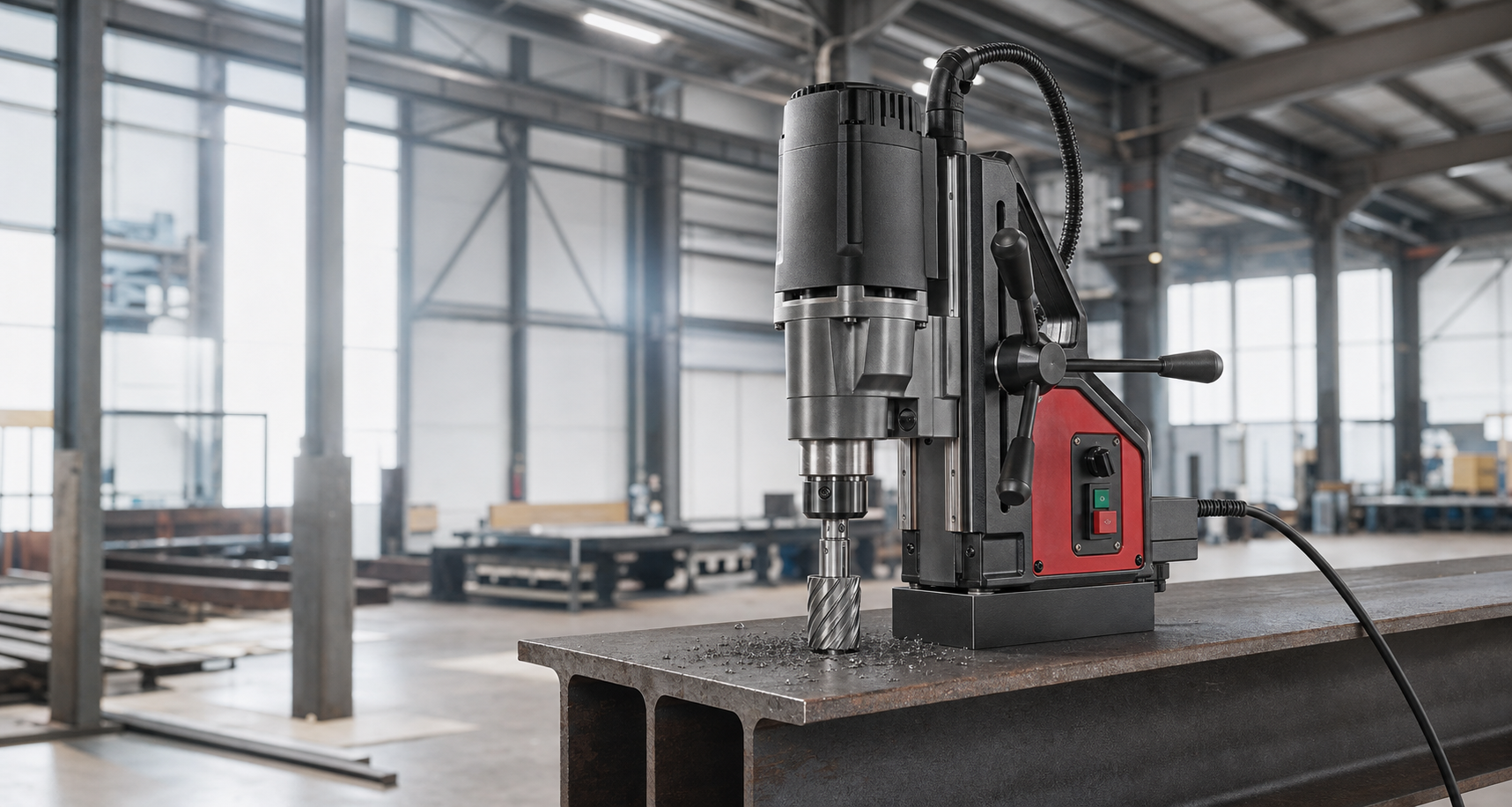
A magnetic drill is a portable machine that uses an electromagnetic base to hold itself to ferromagnetic steel. Combined with an annular cutter, it removes only a ring of material rather than the entire hole, making large holes faster and more efficient than conventional twist drilling.
Start with maximum hole diameter and cutting depth
Cutting capacity is the first specification to confirm. A machine rated for 50 mm annular cutting is designed to use annular cutters up to that diameter under the manufacturer’s stated conditions. Do not select a machine that only just reaches the largest diameter you expect to drill regularly.
Allow practical capacity margin
For repeated production work, choose a machine with capacity above the normal operating diameter. The additional margin helps when drilling harder material, working at depth or using the machine for long duty cycles.
If most jobs are 35–40 mm, a 50 mm-class machine usually provides a more practical operating margin than a machine rated exactly to 40 mm.
Match motor power and speed to the cutter diameter
Larger cutters generally require more torque and lower rotational speed. Smaller cutters can operate at higher speed. Motor wattage is useful, but it does not describe the full cutting performance by itself; the gearbox, torque delivery and speed range also matter.
Simple and efficient
Suitable for buyers working within a narrow, repeatable diameter range.
Flexible and controlled
Better for multiple cutter diameters, materials and operations such as tapping.
Check magnetic adhesion and the real workpiece
Magnetic force figures are measured under defined test conditions. Actual holding performance depends on steel thickness, surface flatness, coatings, rust, scale and whether the machine is working horizontally, vertically or overhead.
- ✓Material
The base requires ferromagnetic steel. It will not hold directly to aluminium or stainless grades with low magnetic response.
- ✓Surface condition
Remove loose rust, chips, paint buildup and debris between the magnet and the steel.
- ✓Workpiece thickness
Thin plate may not allow the magnet to reach its rated holding force and can require a backing plate.
- ✓Safety restraint
Use the supplied safety chain or strap, particularly for vertical and overhead work.
Select the machine and cutter as one system
The spindle connection, arbor, pilot pin and cutter dimensions must be compatible. Buyers should confirm whether they need HSS or TCT annular cutters, the required cutting depth, and whether a coolant system or external lubrication is appropriate.
High-Speed Steel Cutters
Good toughness, broad general-purpose use and the ability to be resharpened.
Best for: structural steel and varied workshop useTungsten Carbide Tipped Cutters
High cutting speed and strong performance in demanding or abrasive materials.
Best for: productivity and harder applicationsMagnetic drill selection table
Use this matrix as a starting point. Final selection should also consider material grade, duty cycle, working position and local power supply.
| Hole requirement | Typical power | Machine class | Typical application |
|---|---|---|---|
| Up to 30 mm | 1,000–1,500 W | Compact / portable | Installation, light fabrication, maintenance |
| 31–50 mm | 1,400–1,600 W | Professional | Structural steel, workshops, general fabrication |
| 51–80 mm | 1,800–2,000 W | Heavy-duty | Bridge, shipbuilding, large beams and plate |
| Multiple operations | Variable speed | Multi-function | Drilling, reaming, countersinking and tapping |
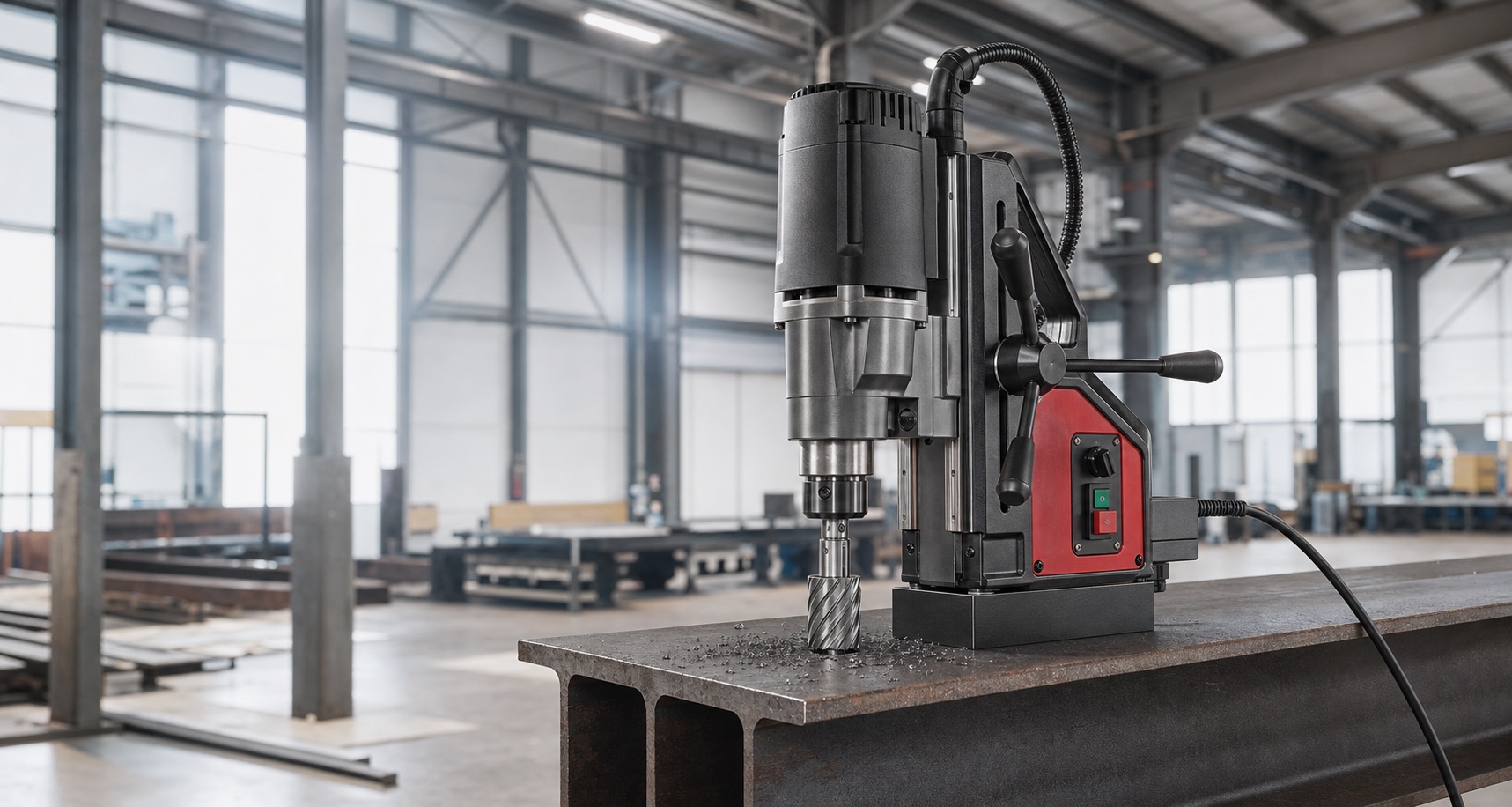
D8880Z Multi-Function Magnetic Drill
80 mm annular cutting · 2,000 W · 0–350 r/min · 16,000 N magnetic adhesion
View D8880Z details →Five common purchasing mistakes
- 01Buying by wattage only
Capacity, torque, speed range and gearbox design matter together.
- 02Ignoring cutting depth
A cutter diameter may fit while the required depth exceeds the machine or tooling configuration.
- 03Forgetting the working position
Vertical, overhead and restricted-space work can change the ideal machine format.
- 04Separating machine and tooling purchases
Confirm cutter shank, arbor, pilot pin and coolant compatibility before ordering.
- 05Not confirming voltage and frequency
Export buyers should state the destination market and required electrical configuration.
A good magnetic drill is a matched drilling system.
Define the hole, material and working condition first. Then select the machine capacity, speed, magnetic force and compatible cutter system. This approach produces a safer, more productive purchase than comparing model names or motor wattage alone.
Compare FERROVANTA ModelsFREQUENTLY ASKED QUESTIONS
Magnetic drill selection FAQ
01What size magnetic drill do I need?+
Choose a machine whose rated annular cutting capacity is above your largest planned hole diameter. Also check cutting depth, motor power and available clearance around the workpiece.
02Can a magnetic drill use a standard twist drill?+
Yes, when the machine and arbor configuration support a drill chuck or suitable adapter. Check the maximum twist-drill diameter separately from the annular cutting capacity.
03How thick must steel be for a magnetic drill?+
The workpiece must provide enough ferromagnetic mass for safe magnetic adhesion. Thin plate may require a backing plate or alternative clamping method. Always follow the machine safety instructions.
04Is a variable-speed magnetic drill worth it?+
Variable speed is valuable when you work across different diameters, cutter materials or operations such as tapping and countersinking. It gives better control and helps protect the cutting tool.
05What information should I send to a supplier?+
Send the material, maximum hole diameter, cutting depth, working position, voltage, required operations, order quantity and target market. This allows the supplier to recommend the machine and compatible cutter system together.