
Direct Answer
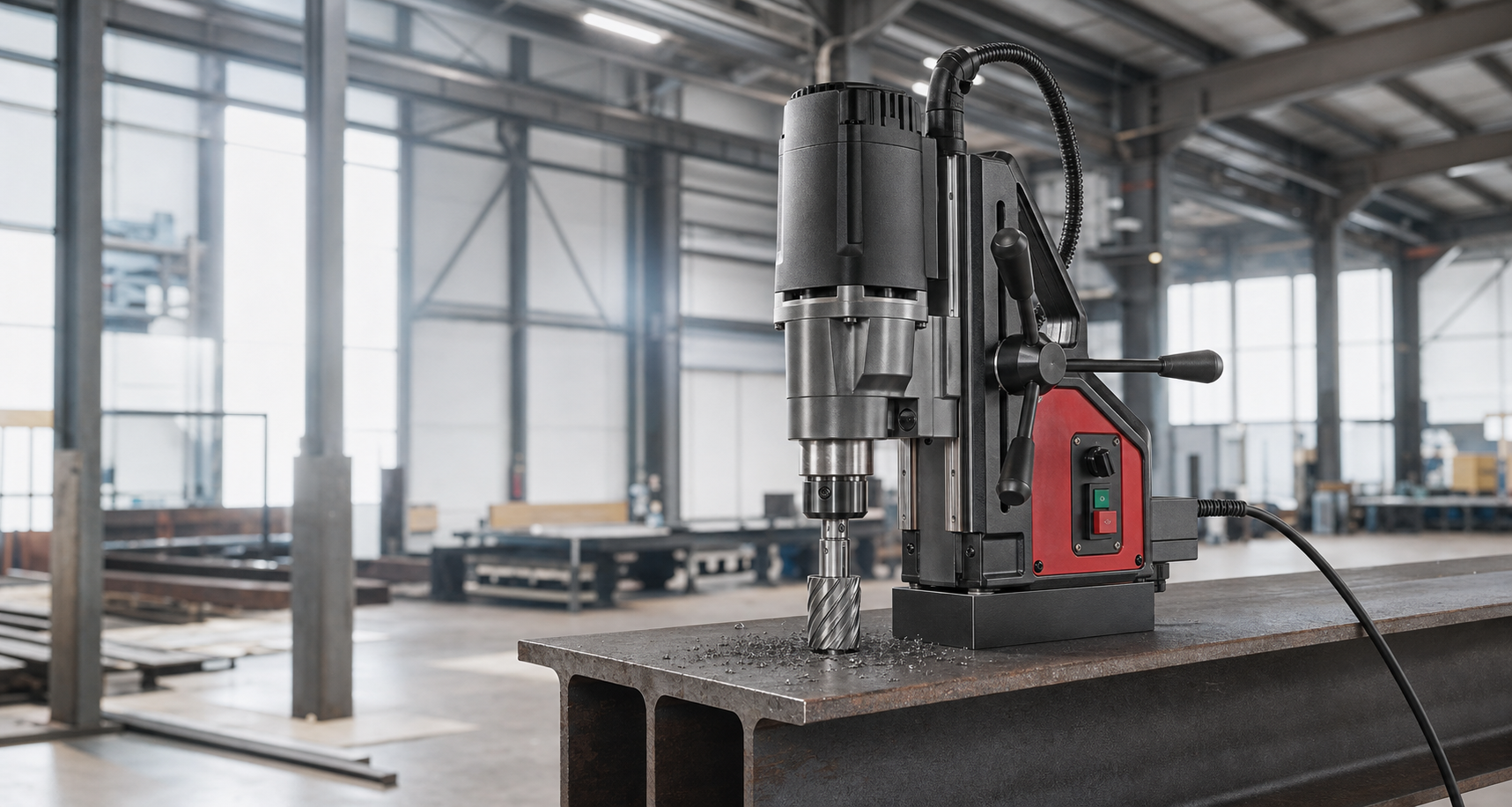
A magnetic drill uses an electromagnetic base to hold a portable drilling machine against ferromagnetic steel. Its motor and gearbox rotate an annular cutter or another compatible tool while the operator feeds the cutter through the workpiece. The magnet provides workholding; the cutter removes material. Both systems must be correctly matched for stable, accurate drilling.
The Six Main Parts
Electromagnetic Base
The base creates a magnetic circuit through the steel workpiece. Clean, flat contact and adequate steel thickness are essential. Paint, rust, scale, curvature and air gaps can reduce real holding force.
Motor and Gearbox
The motor supplies power while the gearbox converts speed into usable torque. Larger cutters generally need lower rotational speed and higher torque. Variable-speed machines support a wider range of diameters and operations.
Slide and Feed Handles
The slide guides the motor vertically. The operator turns the feed handles to apply controlled pressure. Excessive feed can overload the cutter and motor; insufficient feed can create rubbing and heat.
Arbor
The arbor connects the spindle to an annular cutter. Its shank, retaining screws and internal coolant path must match the cutter system.
Pilot Pin
The pilot pin locates the hole centre, often opens the coolant flow and ejects the completed slug. It must match the cutter length and move freely.
Annular Cutter
An annular cutter removes only a ring of material and leaves a solid centre slug. Because it does not remove the full hole cross-section, it can produce large holes efficiently in steel.
Operating Sequence
- Confirm that the steel is magnetic, stable and suitable for the machine.
- Clean the base contact area and mark the hole centre.
- Fit the correct cutter and pilot pin.
- Position the machine and attach the safety restraint.
- Energise the magnet and verify stability.
- Select the correct speed and start the motor.
- Apply cutting fluid and feed smoothly.
- Reduce feed near breakthrough.
- Stop the motor and control the hot slug.
- Release the magnet only after rotation stops.
Why Workpiece Thickness Matters
Magnet ratings are normally measured on a defined steel plate. Thin steel may not carry the full magnetic flux, reducing adhesion. A suitable backing plate can help in some applications, but the complete method must follow the machine instructions and site controls.
Magnetic Drill vs Conventional Drilling
A handheld drill depends on the operator to resist torque and maintain alignment. A drill press holds the spindle in a fixed workshop structure. A magnetic drill brings a guided spindle to an installed steel structure and uses the workpiece as part of its holding system.
What Determines Hole Quality?
Hole quality depends on base stability, spindle runout, cutter condition, correct speed, controlled feed, lubrication and chip evacuation. A higher motor wattage cannot compensate for poor magnetic contact or a damaged cutter.
Need a configuration recommendation? Send FERROVANTA the material, steel thickness, hole diameter, cutting depth, voltage and working position.
FAQ
Does a magnetic drill work without electricity?
An electromagnetic drill normally requires electricity for both the magnet and motor. Pneumatic or hydraulic systems may use different power arrangements but still require an approved holding method.
Can a magnetic drill work on aluminium?
The electromagnetic base will not hold directly to aluminium. An engineered clamping or vacuum solution may be required.
Why does a magnetic drill use an annular cutter?
An annular cutter removes less material than a twist drill of the same diameter, which can reduce cutting load and cycle time.
Can it drill vertically or overhead?
Some machines can, provided the surface, restraint, coolant method and site procedure are suitable. Follow the model instructions.
What happens if power is lost?
An electromagnetic base can lose holding force. A correctly installed safety chain or strap is essential, particularly outside horizontal bench work.
Conclusion
A magnetic drill is a portable machining system built around magnetic workholding, controlled feed and efficient annular cutting. Reliable performance comes from matching the machine, cutter and actual steel condition.
Explore Magnetic Drills: Compare FERROVANTA models or send your requirements for technical selection support.