Introduction
HSS and TCT annular cutters can both produce fast, accurate holes with a magnetic drill, but they are not interchangeable in every application. The best choice depends on the workpiece material, hole diameter, cutting depth, machine speed, surface condition, production volume and the way operators handle the tool.
The short answer is:
- Choose HSS annular cutters when toughness, general-purpose structural steel work, resharpening and tolerance of variable site conditions are priorities.
- Choose TCT annular cutters when higher cutting speed, heat resistance and productivity in demanding or abrasive material are more important.
- Do not choose by cutter material alone. Confirm the magnetic drill’s speed range, arbor, shank, pilot pin, coolant method and available magnetic holding force.
This guide is written for industrial distributors, steel fabricators, maintenance teams and buyers who need a defensible product decision—not a marketing slogan. It explains the practical trade-offs and the inspection questions that should be answered before an order is released.
What Is an Annular Cutter?
An annular cutter removes a ring of material and leaves a solid slug in the centre. A conventional twist drill removes the full cross-section of the hole. Because an annular cutter cuts less material, it can produce larger holes efficiently with a portable magnetic drilling machine.
A complete cutting system normally includes:
- The magnetic drill.
- The arbor or spindle connection.
- The annular cutter.
- The correct pilot pin.
- Cutting fluid or coolant.
- A secure ferromagnetic work surface.
The cutter material—HSS or TCT—is only one part of this system. Many premature failures blamed on the cutter actually begin with incorrect speed, inadequate lubrication, poor chip evacuation, a mismatched pilot pin, loose spindle runout or insufficient magnetic adhesion.
What Is an HSS Annular Cutter?
HSS means high-speed steel. The cutter body and cutting teeth are produced from a high-speed steel grade and ground into the required geometry. HSS retains useful hardness at elevated cutting temperatures while also providing toughness.
Where HSS Cutters Are Strong
HSS cutters are widely used for general structural steel, fabrication work, beams, plate and site maintenance. Their toughness can be helpful when the operating environment is less controlled or when vibration and interrupted contact are possible.
They are also commonly selected when resharpening is part of the user’s tooling programme. A properly manufactured HSS cutter can often be reground by a competent sharpening service, provided tooth damage and body wear are not excessive.
HSS Limitations
HSS normally runs at lower cutting speeds than a suitable TCT cutter. When heat is not controlled, the cutting edges can soften and lose sharpness. Excessive feed pressure, insufficient cutting oil or blocked flutes can accelerate wear.
HSS should not automatically be described as “cheap” or “basic.” Cutter quality depends on steel grade, heat treatment, concentricity, tooth geometry, grinding quality and inspection. A poor HSS cutter and a well-made HSS cutter may perform very differently under the same nominal conditions.
What Is a TCT Annular Cutter?
TCT means tungsten carbide tipped. Carbide teeth are attached to a steel cutter body. Carbide is harder and more heat resistant than conventional high-speed steel, which allows an appropriate TCT cutter to operate at higher cutting speeds in many applications.
Where TCT Cutters Are Strong
TCT cutters are often selected for productivity, larger diameters and demanding materials. The carbide tips can maintain a cutting edge at higher temperature and can be effective where abrasive wear would shorten HSS tool life.
In a production environment with stable workholding, the correct machine speed, controlled feed and consistent coolant delivery, TCT can reduce cycle time and provide strong output per shift.
TCT Limitations
Carbide is hard but less tolerant of shock than HSS. Tooth damage can occur if the cutter is dropped, started before it contacts the work correctly, forced through an interrupted cut or allowed to chatter because the machine is not secure.
For field use, a buyer should consider operator training and the condition of the workpiece. TCT may provide excellent performance, but it is not always the most forgiving option on rusty, uneven or unstable steel.
HSS vs TCT Annular Cutters: Direct Comparison
| Decision factor | HSS annular cutter | TCT annular cutter |
|---|---|---|
| Edge material | High-speed steel | Tungsten carbide tips on a steel body |
| Toughness | Generally more tolerant of shock | Harder but more sensitive to impact and chatter |
| Cutting speed | Moderate | Generally higher when conditions permit |
| Heat resistance | Good | Higher |
| Resharpening | Commonly possible through a qualified service | Possible in some designs but more specialised |
| Typical use | General structural steel, fabrication, varied site work | High productivity, larger holes, abrasive or demanding materials |
| Operator sensitivity | Relatively forgiving | Requires controlled setup and feed |
| Initial price | Often lower | Often higher |
| Cost per hole | Depends on application and resharpening | Can be lower in stable high-output production |
This table is a selection framework, not a performance guarantee. Actual results depend on cutter grade, diameter, depth, machine condition, material hardness, coolant and operator technique.
Which Cutter Is Better for Structural Steel?
For ordinary structural steel, both HSS and TCT can be suitable. The better choice is determined by the operating model.
Choose HSS When:
- The workshop drills a broad mix of common structural steel.
- Site conditions are variable.
- Operators value a tougher, more forgiving cutting edge.
- The company has access to reliable resharpening.
- Production volume does not justify the higher initial cost of carbide.
- Curved or interrupted surfaces may create shock loading, subject to an approved fixture and safe setup.
Choose TCT When:
- Higher throughput is required.
- The drilling process is stable and repeatable.
- Larger diameters or abrasive materials are common.
- The machine provides the appropriate speed and rigidity.
- Operators are trained to avoid impact, chatter and excessive feed.
- Tool life is measured by cost per completed hole rather than purchase price alone.
For a distributor, the strongest product range is usually not “HSS only” or “TCT only.” It is a clear two-family system with selection guidance that prevents buyers from using the wrong cutter in the wrong conditions.
Material Matters More Than the Product Label
“Steel” is not one material. Mild structural steel, high-strength plate, stainless steel, cast material and hardened components behave differently. Before recommending a cutter, collect:
- Material type and grade.
- Approximate hardness when known.
- Plate or section thickness.
- Hole diameter and depth.
- Number of holes per shift or project.
- Whether the surface is flat, curved or interrupted.
- Working position: horizontal, vertical or overhead.
- Machine model and speed range.
If the customer cannot provide the exact grade, request a photograph, drawing or sample description. For important orders, a sample cutting test is more useful than an unsupported life claim.
Cutting Speed, Feed and Heat Control
An annular cutter must run at a speed appropriate to its diameter and material. As cutter diameter increases, rotational speed normally decreases for the same surface cutting speed.
Avoid publishing one universal RPM value for all steel. A credible recommendation should reference the cutter manufacturer’s chart and then be adjusted for machine load, workpiece hardness and cooling.
During factory testing or pre-shipment verification, useful observations include:
- Does the spindle run smoothly without visible cutter wobble?
- Does coolant reach the cutting edge?
- Are chips short enough to clear the flutes?
- Is the operator applying steady feed rather than impact loading?
- Does the motor maintain speed under a normal test cut?
- Is the slug ejected correctly by the pilot pin?
Blue or heavily discoloured chips can indicate excessive heat, although chip colour alone is not a complete diagnosis. Stop and review speed, feed, edge condition and coolant before continuing.
Lubrication and Coolant
HSS cutters are commonly used with a suitable cutting oil. TCT systems may use an appropriate coolant or cutting fluid based on the manufacturer’s recommendation. The fluid must be compatible with the workpiece, cutter and working position.
For horizontal drilling, an internal gravity-feed system may be convenient. For vertical or overhead work, coolant delivery must be controlled to avoid poor lubrication, leakage into the machine or unsafe operator exposure. A paste, spray or externally applied fluid may be recommended for a specific process, but the machine and cutter instructions take priority.
Never treat water alone as a universal coolant. It may provide insufficient lubrication and can promote corrosion. Likewise, a general-purpose spray is not automatically an adequate cutting lubricant.
Cutter Geometry, Shank and Pilot Pin Compatibility
Before purchase, confirm more than the diameter.
Shank
Many magnetic drilling systems use a Weldon-style shank, but shank diameter and proprietary connections vary. A cutter that appears physically similar may not fit the arbor securely.
Cutting Depth
Common cutting depths include approximately 25, 35, 50, 75 and 100 mm, depending on the product family. The machine must have enough stroke and clearance for the cutter, pilot pin and workpiece.
Pilot Pin
The pilot pin centres the cutter, controls coolant flow in many systems and helps eject the slug. It must match the cutter diameter range and cutting depth. The wrong pilot pin can prevent proper seating or safe slug ejection.
Arbor and Runout
Inspect the arbor, bearings and spindle. Excessive runout creates uneven tooth loading and can damage either HSS or TCT cutters. During shipment inspection, a supplier should verify fit, rotation and basic functional operation rather than only counting cartons.
Cost per Hole: A Better B2B Metric
Purchase price is easy to compare but incomplete. For a distributor or fabricator, calculate:
Cost per completed hole = (cutter price + resharpening + downtime + rejected work) ÷ acceptable holes produced
Also consider:
- Operator time.
- Machine utilisation.
- Time spent changing cutters.
- Availability of replacement sizes.
- Resharpening logistics.
- Risk of tooth breakage in the actual application.
A TCT cutter with a higher unit price may produce a lower cost per hole in controlled production. An HSS cutter may be the better commercial choice when it can be resharpened locally and survives variable field use.
Factory Testing and Shipment Inspection
For private-label or volume purchasing, request a documented inspection plan. A practical plan can include:
- Dimensional checks for diameter, shank and cutting depth.
- Visual inspection of tooth grinding or carbide brazing.
- Concentricity or runout checks on sampled units.
- Fit testing with the intended arbor and pilot pin.
- Controlled cutting tests using a defined steel sample.
- Packaging checks to protect teeth during international transport.
- Verification of labels, size markings and batch traceability.
Testing should be reproducible. A video of one successful hole is useful evidence of function, but it does not replace a sampling plan or agreed acceptance criteria.
Common Selection Mistakes
Assuming TCT Is Always Better
Higher hardness and speed do not eliminate the risk of impact damage. The best cutter is the one that matches the operating condition.
Choosing Only by Hole Diameter
Depth, shank, pilot pin, machine stroke and material matter as much as diameter.
Running One Speed for Every Cutter
Large and small cutters should not automatically run at the same RPM.
Ignoring Magnetic Holding Conditions
A premium cutter cannot compensate for a magnetic drill that is unstable on thin, coated or uneven steel.
Quoting Tool Life Without Test Conditions
“Number of holes” claims are meaningless without material, diameter, depth, speed, feed and coolant conditions.
Mid-Article CTA
Not sure whether HSS or TCT fits your application?
Send FERROVANTA the material, hole diameter, cutting depth, machine model and estimated monthly quantity. We will recommend a cutter family and compatible pilot pin/arbor configuration.
CTA button: Send Your Requirements
FAQ
Is TCT always faster than HSS?
TCT can operate at higher cutting speeds in many suitable applications, but real cycle time depends on the machine, cutter diameter, feed, workpiece and setup. An unstable TCT setup can perform worse than a correctly used HSS cutter.
Can HSS annular cutters be resharpened?
Many HSS cutters can be resharpened by a qualified service if the body and teeth are not severely damaged. Confirm the product design and allowable regrinding limits with the supplier.
Can I use a TCT cutter on mild steel?
Yes, an appropriate TCT cutter can work well on mild steel, particularly where productivity is important. HSS may still be preferred for toughness, lower initial cost or variable site conditions.
Which cutter is better for stainless steel?
The answer depends on stainless grade, thickness, work hardening behaviour and machine capability. Use a cutter specifically recommended for the material, control speed and feed carefully, and apply the specified cutting fluid.
Do HSS and TCT cutters use the same pilot pin?
Not necessarily. Pilot pin length and diameter depend on cutter family, diameter and cutting depth. Always match the pilot pin to the exact cutter specification.
Why do carbide teeth break?
Common causes include impact, chatter, misalignment, interrupted cutting, excessive feed, inadequate magnetic adhesion, worn spindle components and mishandling during transport.
Can annular cutters be used in a drill press?
They can be used only when the machine, arbor, speed, lubrication and workholding are suitable. Do not improvise an unsupported connection. Follow the cutter and machine manufacturer’s instructions.
Conclusion
HSS and TCT annular cutters solve different production problems. HSS offers a strong balance of toughness, general-purpose performance and resharpening potential. TCT offers hardness, heat resistance and productivity when the setup is stable and the operator controls speed and feed correctly.
The most reliable purchasing decision begins with the application. Define the material, hole size, depth, volume, working position and machine model. Then verify cutter geometry, shank, pilot pin, arbor, coolant and inspection criteria as one system.
Final CTA
FERROVANTA supplies HSS and TCT annular cutter systems for global B2B buyers, distributors and OEM programmes. Send your target sizes, cutting depths, market, packaging requirements and annual demand to receive a product recommendation and quotation.
Primary CTA: Get a Quote
Secondary CTA: Ask for Product Catalog
---
Image Plan
Image 1
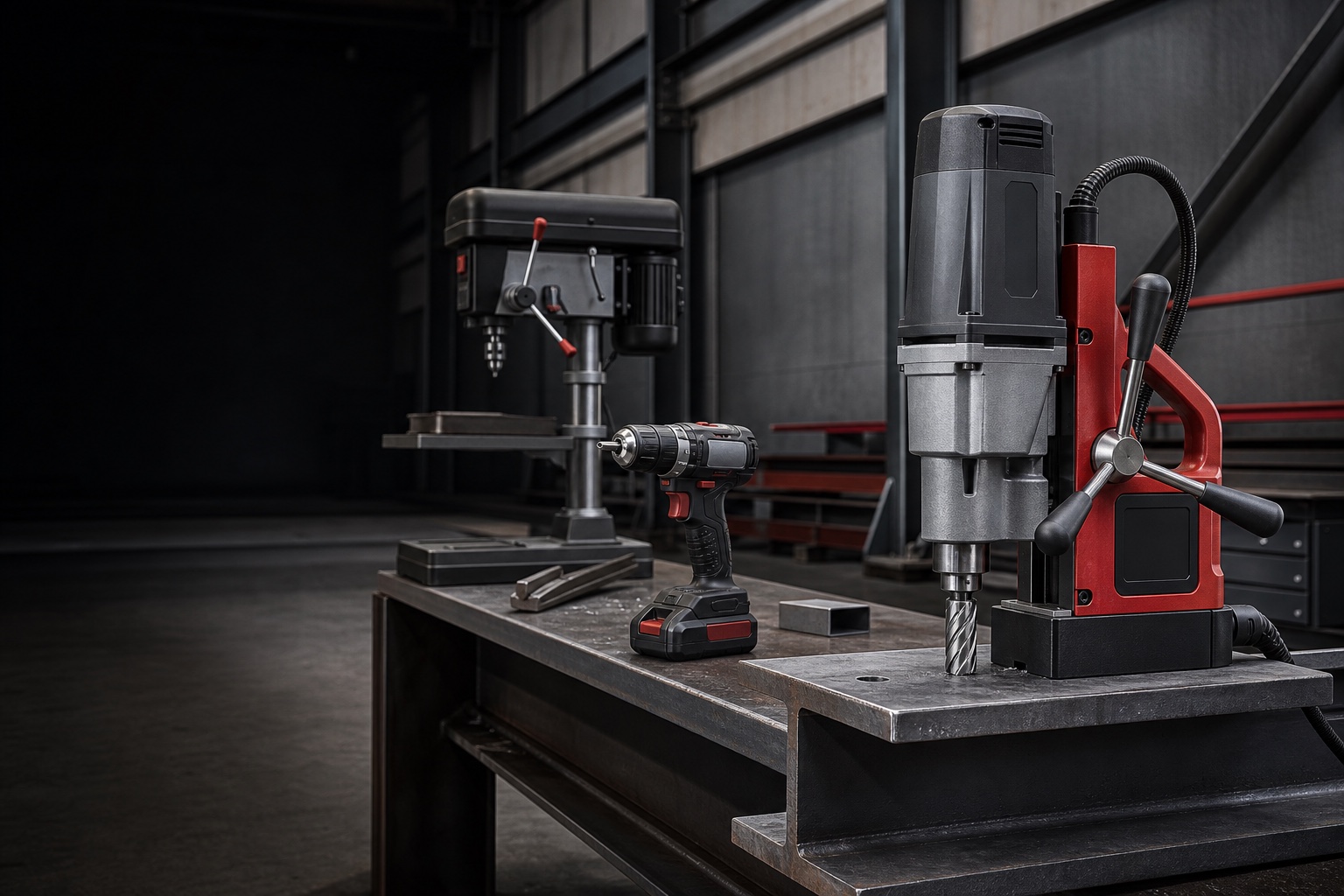
- Purpose: Hero image showing the cutter decision in a professional workshop.
- Insert position: Below the H1.
- Caption: “HSS and TCT annular cutters should be selected by material, machine and production conditions.”
- ALT text: “HSS and TCT annular cutters beside a magnetic drill in a steel fabrication workshop”
- AI image prompt: “Photorealistic industrial product editorial image, an HSS annular cutter and a tungsten carbide tipped annular cutter placed side by side on a clean steel workbench, professional red and graphite magnetic drill softly out of focus in the background, modern steel fabrication workshop, precise machining details, realistic metal surfaces, neutral daylight, premium B2B catalog aesthetic, no visible brand logos, no text, 16:9”
Image 2
- Purpose: Explain tooth construction and product details.
- Insert position: After “What Is a TCT Annular Cutter?”
- Caption: “Cutting-edge construction influences heat resistance, toughness and application fit.”
- ALT text: “Close-up comparison of HSS annular cutter teeth and carbide tipped cutter teeth”
- AI image prompt: “Macro industrial product photography comparing two annular cutter cutting edges, one fully ground high-speed steel cutter and one steel body cutter with brazed tungsten carbide teeth, sharp realistic tooth geometry, controlled studio lighting, dark graphite background with subtle red accent, technical catalog quality, no text, no logo, 3:2”
Image 3
- Purpose: Add E-E-A-T factory testing context.
- Insert position: In “Factory Testing and Shipment Inspection.”
- Caption: “A controlled cutting test should record the machine, material, cutter size, speed and coolant conditions.”
- ALT text: “Factory technician testing an annular cutter with a magnetic drill on structural steel”
- AI image prompt: “Photorealistic quality-control scene inside an industrial tool factory, trained technician wearing safety glasses and gloves operating a magnetic drill with annular cutter on a structural steel plate, inspection sheet and caliper visible nearby, clean organized testing station, realistic metal chips and coolant control, premium documentary photography, no readable branding, 16:9”
Image 4
- Purpose: Show shipment inspection and packaging.
- Insert position: After the inspection checklist.
- Caption: “Protecting cutter teeth and verifying size markings are essential before export shipment.”
- ALT text: “Annular cutters undergoing export shipment inspection and protective packaging”
- AI image prompt: “Realistic export shipment inspection for precision annular cutters, rows of individually protected cutters in foam packaging, inspector checking diameter with digital caliper, cartons and batch labels in background with no readable text, clean industrial warehouse, high-end B2B manufacturing photography, red and graphite visual accents, 16:9”
CTA and Popup Plan
Mid-Article CTA
- Position: After “Cost per Hole.”
- Format: Inline dark technical consultation card.
- Headline: “Need a cutter recommendation based on your material?”
- Body: “Send the steel grade, diameter, depth, machine model and monthly volume. We will recommend HSS or TCT and the matching pilot pin.”
- Button: “Send Your Requirements”
- Destination:
/contact
End CTA
- Position: Immediately after the conclusion.
- Format: Full-width red quotation block.
- Headline: “Build the right annular cutter range.”
- Buttons: “Get a Quote” and “Ask for Product Catalog”
- Destination:
/contact
Popup
- Trigger: First trigger at 45% scroll; backup trigger after 40 seconds; suppress for seven days after dismissal. Avoid aggressive exit-intent on mobile.
- Title: “HSS or TCT? Get a Practical Recommendation.”
- Description: “Tell us the material, hole size and cutting depth. FERROVANTA will suggest a suitable cutter system.”
- Fields: Name (required), Email (required), Phone / WhatsApp (required), Material, Diameter and depth.
- Submit button: “Ask a Product Specialist”