
The Short Answer
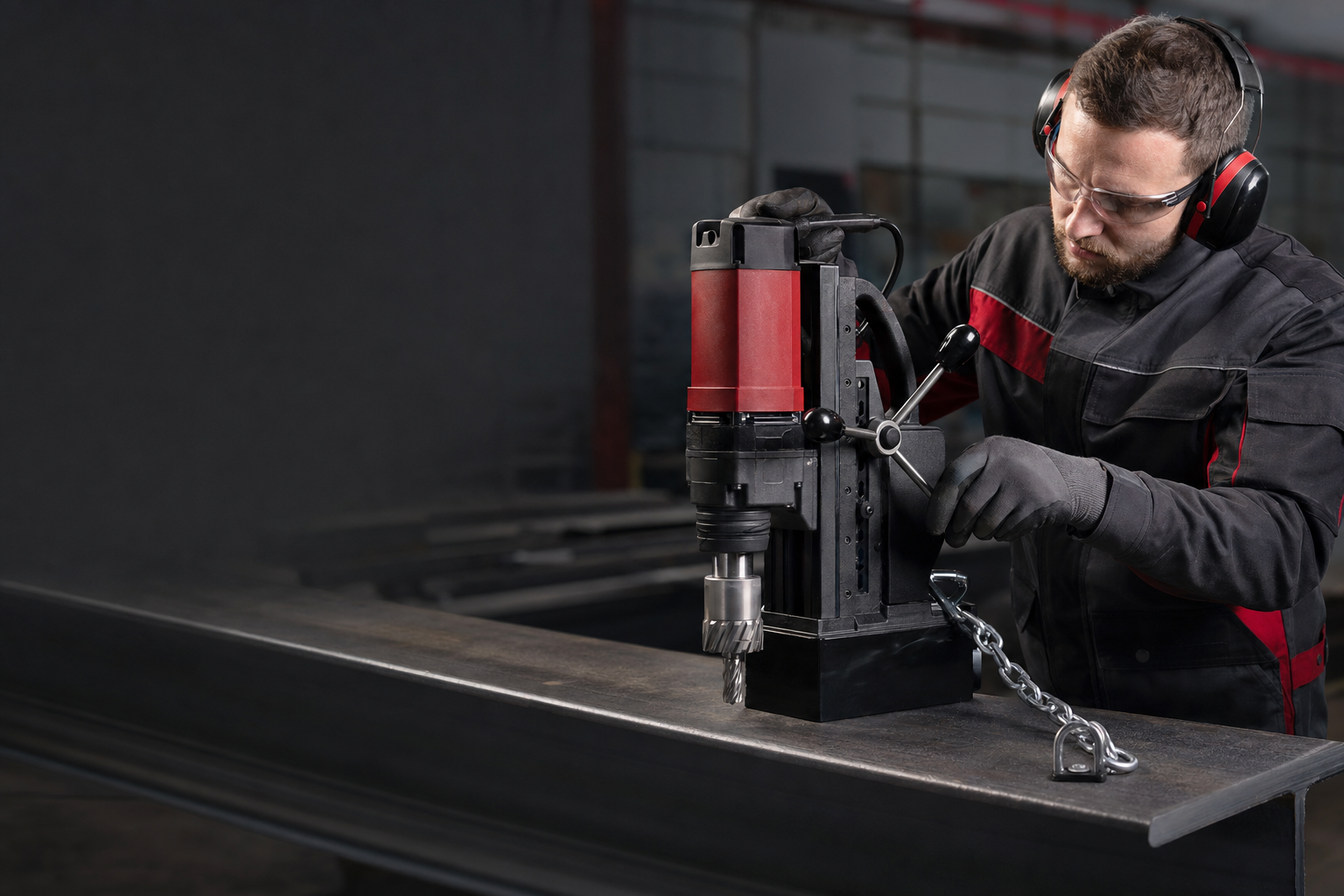
A magnetic drill should be used only on a clean, stable ferromagnetic surface with adequate thickness, a correctly fitted cutter, a secured safety chain or strap, and a power supply suitable for the machine. The operator should verify magnetic adhesion before starting the motor, keep the cable and coolant away from the cutting area, and stop immediately if the base shifts, the cutter chatters or power is interrupted.
This checklist supports job planning and operator training. It does not replace the machine manual, site risk assessment, local regulations or a competent supervisor.
Why Magnetic Drill Safety Starts Before the Trigger
A magnetic drill is portable, but it is not a handheld drill. Its stability depends on the relationship between the electromagnetic base and the workpiece. Paint, scale, rust, gaps, thin plate, curved steel and an uneven surface can reduce effective holding force. Published magnet-force figures are normally measured under controlled conditions and should not be treated as a guarantee on every job.
For a B2B buyer, safety therefore begins during model selection. The supplier needs to understand the material, plate thickness, hole diameter, cutting depth, work position, power supply and expected duty cycle. A machine selected only by motor wattage may be unsuitable for the actual setup.
Pre-Start Magnetic Drill Safety Checklist
1. Confirm the Workpiece
- Verify that the material is ferromagnetic and structurally stable.
- Remove loose rust, scale, chips, oil and heavy coatings beneath the magnetic base.
- Check that the contact area is flat enough for full base contact.
- Confirm the workpiece thickness against the machine instructions.
- Do not assume a magnetic base will hold safely on stainless steel, aluminium or composite material.
When the workpiece is thin, a suitable backing plate may improve the magnetic circuit, but it must be engineered and secured for the job. Do not improvise with loose scrap.
2. Inspect the Machine
Check the power cable, plug, switches, handles, slide, spindle, arbor, coolant system and magnetic base. The slide should move smoothly without excessive play. The arbor must be clean, and the cutter retaining screws must engage the correct flats.
If the machine has overload, restart protection, magnet monitoring or an integrated coolant system, verify these functions according to the manual. Safety features reduce risk; they do not correct an unstable setup.
3. Select the Correct Cutter and Pilot Pin
Confirm cutter diameter, cutting depth, shank, pilot pin and machine speed range. Inspect HSS teeth for chipping and TCT teeth for damage or missing tips. A blunt or damaged cutter increases heat, feed force and the chance of chatter.
The pilot pin helps locate the centre, manages coolant in many systems and ejects the slug. It must move freely and match the cutter depth.
4. Secure the Drill
Attach the approved safety chain or strap before starting the motor. On vertical or overhead work, position it so the machine cannot fall if magnetic holding force is lost. The secondary restraint should be short enough to limit movement and should be attached to a structure capable of carrying the machine.
5. Verify Power and Coolant
Use the voltage and frequency specified for the machine. Extension cables must be appropriately rated for length and load. Unstable generators, undersized cables and damaged connectors can cause voltage drop, heat and unexpected shutdown.
Use the recommended cutting fluid. Plan coolant delivery carefully for vertical or overhead work so fluid does not enter the motor or create an exposure hazard.
Safe Operating Sequence
- Mark the hole centre and position the pilot pin.
- Energise the magnet while the motor remains off.
- Test stability without levering the machine or placing hands beneath it.
- Attach and confirm the secondary restraint.
- Set the correct speed before the cutter contacts the material.
- Start the motor and apply a smooth, controlled feed.
- Reduce feed as the cutter approaches breakthrough.
- Allow the slug to eject into a controlled area; it may be hot and sharp.
- Stop the motor, wait for rotation to cease, then release the magnet.
Do not force the feed to compensate for a blunt cutter. A healthy cut produces consistent chips and sound. Increasing vibration, squeal, smoke, discoloured chips or reduced motor speed are reasons to stop and inspect.
Vertical and Overhead Drilling
Vertical and overhead applications require additional controls because gravity changes the consequence of magnet loss, coolant flow and slug ejection.
- Use a secondary restraint every time.
- Establish an exclusion zone below the work.
- Control the hot slug and chips.
- Keep coolant away from the motor and operator.
- Avoid standing directly beneath the machine.
- Use fall protection and access equipment required by the site.
- Confirm that the selected model is approved for the work position.
For overhead work, a lighter machine may reduce handling risk, but low weight alone does not make a model suitable. Evaluate magnet footprint, rated capacity, working height, handles and restart behaviour.
Common Unsafe Practices
Starting the Motor Before the Magnet Is Secure
Motor torque can rotate or displace an unsecured machine. The magnet should be energised and stability confirmed first.
Using the Drill on a Dirty or Uneven Surface
A small air gap can materially reduce holding performance. Clean both the base and workpiece.
Removing the Safety Chain Because the Magnet “Feels Strong”
The restraint is protection against power loss, surface failure and unexpected movement. It is especially important outside a horizontal bench setup.
Catching the Slug by Hand
The slug may eject suddenly and can be hot with sharp edges. Keep hands clear and control the drop zone.
Changing the Cutter While Connected to Power
Isolate the machine before fitting, cleaning or inspecting the cutter.
Buyer and Distributor Safety Questions
Before ordering, ask the supplier:
- What workpiece thickness and surface conditions are assumed for the magnet rating?
- Does the machine include restart protection or magnet monitoring?
- Which safety chain or strap is supplied?
- What are the approved working positions?
- Which cutter shanks, diameters and depths are supported?
- What speed guidance and operating manual are provided?
- Are replacement switches, cables, arbors and carbon brushes available?
- Can the supplier provide factory test and shipment inspection records?
At FERROVANTA, shipment inspection can be aligned with agreed customer requirements: power-on checks, magnet and switch function, spindle running, slide movement, accessory verification, label review and packaging inspection. Test scope and acceptance criteria should be confirmed before production rather than assumed after loading.
Planning a distributor or project order? Send the workpiece material, thickness, hole range, working position, voltage and destination to request a suitable configuration.
FAQ
Can a magnetic drill be used on vertical steel?
It can when the machine is approved for the application, the surface provides adequate adhesion and a suitable secondary restraint is installed. Follow the manual and site risk controls.
Can a magnetic drill work on painted steel?
Paint creates a gap and may reduce magnetic holding force. The safe preparation method depends on coating thickness, surface condition and project requirements.
Is a safety chain required on a magnetic drill?
Use the secondary restraint specified by the manufacturer and site procedure, particularly for vertical and overhead work.
What happens if power fails?
An electromagnetic base can lose holding force. A properly installed safety chain or strap helps prevent a fall. Machines with restart protection may prevent automatic motor restart, but the operator must still isolate and reassess the setup.
Why does an annular cutter chatter?
Possible causes include poor magnetic contact, spindle runout, a loose arbor, incorrect speed or feed, a blunt cutter, insufficient coolant or an unstable workpiece.
Conclusion
Safe magnetic drilling is a system: correct machine selection, clean contact, verified adhesion, secondary restraint, compatible cutter, controlled feed and trained operation. No single specification replaces a disciplined setup.
Send Your Requirements: Contact FERROVANTA with your application details to receive a model recommendation, accessory list and inspection proposal for your market.